All Art?
25 Years Museum Prinzhorn Collection, 28 June 2026 – 31 January 2027
Madness! In 2026, the Prinzhorn Collection Museum at Heidelberg University Hospital will celebrate its 25th anniversary. The anniversary exhibition “Is It All Art?” focuses on a question that has accompanied the institution since its founding: How can visual artworks from a psychiatric context be exhibited, many of which were never originally intended for the public or created as art?
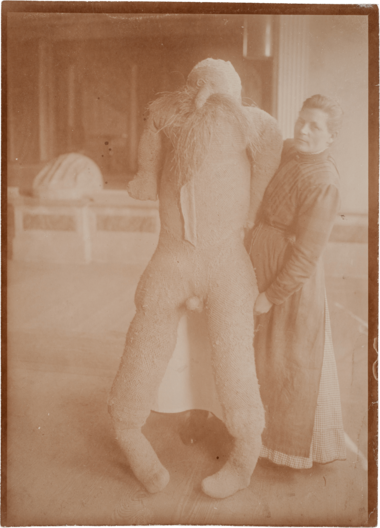
The exhibition presents iconic works from the collection—dedicated to art by people with lived experience of psychiatry—in new ways. For instance, the handmade banknotes by Else Blankenhorn are reprinted and can be “exchanged” by visitors for euros. The life-sized doll by Katharina Detzel, previously known only through a photograph, has been meticulously reconstructed. Marie Lieb’s floor installation can also be experienced as a spatial work once again for the first time. In this way, the exhibition simultaneously reflects on 25 years of display practice: does the existing mode of presentation do justice to these works as art, or do they call for new, expanded forms of exhibition?
The Prinzhorn Collection on Tour
Selected works from the collection will be loaned to renowned art institutions, where they will enter into dialogue with the respective collections. In doing so, the question “Is It All Art?” is deliberately carried into different institutional and curatorial contexts.
The History of the Prinzhorn Collection Museum
At the beginning of the twentieth century, Hans Prinzhorn expanded the teaching materials collection of the Heidelberg Psychiatric Clinic with thousands of works created in institutions, both from Germany and abroad. His attempt to establish a “museum of pathological art” did not succeed; instead, his book “Artistry of the Mentally Ill” brought the collection to international attention. After being instrumentalised by the Nazis, the collection fell into obscurity until it was rediscovered through exhibitions. In 2001, it was given its own museum, not least in response to efforts to relocate it to Berlin. Today, the collection comprises around 40,000 works. A central aim of its exhibition and collecting practice is to contribute to the destigmatisation of experiences of psychiatry.